
Request a consultation (702) 475-8884Nevada   /   California
Personal injury • Injured riders

California and Nevada Motorcycle Accident
Lawyer

Hurt in a California or Nevada motorcycle crash? Learn about fault, evidence, serious-injury damages, and state-specific claim rules.

Visibility, timing & movement

A motorcycle claim deserves its own investigation

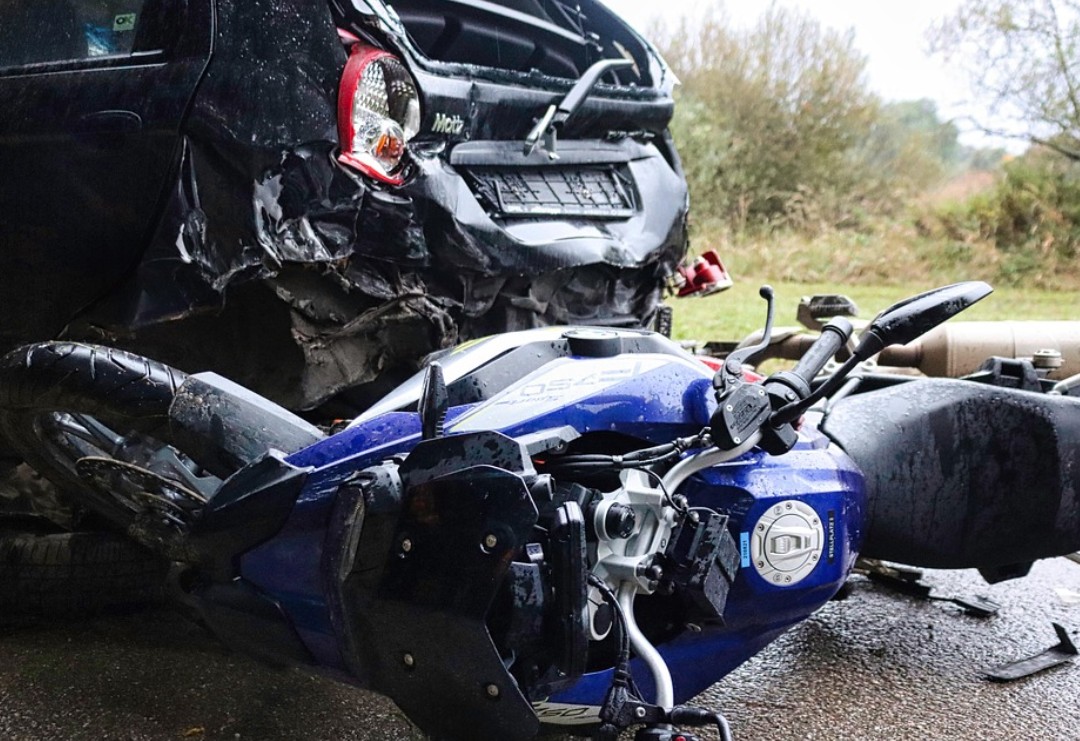
Motorcycle collisions are often severe, and riders frequently face an unfair assumption that they must have been speeding or taking risks. The evidence—not a stereotype—should decide fault. A driver may have turned across the rider’s path, changed lanes without seeing the motorcycle, followed too closely, opened a door, or entered from a driveway. Road debris, defective parts, or negligent repair can also cause a crash in which no second vehicle remains at the scene.

The firm’s motorcycle work focuses on visibility, timing, vehicle movement, roadway conditions, and the full effect of the injury. A careful investigation can test a driver’s claim that the motorcycle “came out of nowhere.”

A rider-specific investigation

Evidence that can change the case

Preserve the motorcycle

The motorcycle, helmet, riding gear, and failed components should be preserved until an appropriate inspection is complete. Scene photographs should capture skid and gouge marks, debris, sight lines, lane width, lighting, signs, and surface defects. Dash cameras, helmet cameras, nearby security systems, GPS records, vehicle event data, phone information, and 911 calls may establish the sequence with more precision than memory alone.
Look beyond the driver

Potentially responsible parties can include a negligent driver, vehicle owner, employer, roadway contractor, public entity, repair shop, or product manufacturer. The correct defendants depend on facts that may not appear in the traffic report.

Understand the rider’s losses

Motorcycle crashes can cause fractures, road rash, degloving injuries, nerve damage, brain or spinal trauma, amputation, internal injury, scarring, and psychological harm. Future surgery, rehabilitation, prosthetic care, diminished earning capacity, and loss of independence may be as important as the initial hospital bill.

Helmets, lanes & state law

Different rules in California and Nevada

California:

California requires motorcycle operators and passengers to wear compliant safety helmets. California law defines lane splitting, and California Highway Patrol guidance identifies it as legal; whether it was performed with reasonable care remains fact-specific. For California motorcycle claims, comparative fault is applied on a pure basis. Injury actions are generally subject to a two-year limitations period, while a dangerous-road claim against a state or local public entity may require a written government claim within six months after accrual. Exceptions may apply.

Nevada:

Nevada prohibits lane splitting and generally requires approved helmets and eye protection, subject to limited exceptions. To recover on an ordinary negligence theory, a rider’s share of negligence generally must be no greater than the combined share assigned to the defendants from whom recovery is sought. Damages are reduced by the rider’s assigned percentage. Nevada generally applies a two-year limitations period, though public-entity, product, and other specialized claims require separate analysis.

Helmet use, licensing, or rider conduct may be disputed in either state. Those issues do not automatically excuse a driver’s unsafe turn or lane change; the connection between the alleged conduct and the particular injury must be evaluated.

Preservation after a motorcycle crash

Protect the physical proof

Seek medical care and make sure all injuries are recorded. Photograph the motorcycle and location before conditions change. Save the helmet, clothing, electronics, damaged components, towing documents, repair estimates, and communications with insurers. Do not repair, sell, or destroy key items until the need for inspection has been assessed. When a roadway condition may be involved, identifying the correct public entity and deadline cannot wait.

Talk about the riding evidence
Motorcycle Accidents

Motorcycle claim questions

View all FAQs

What if the driver says I was speeding?

Speed should be tested through video, distances, timing, damage, marks, electronic data, witness accounts, and reconstruction—not assumed because the vehicle was a motorcycle.

Can I have a claim after a single-motorcycle crash?

Yes. A roadway defect, spilled cargo, a vehicle that left the scene, negligent repair, or a defective tire or component may have caused or contributed to the crash.

Should I keep the damaged motorcycle?

Usually, yes. Store it securely and avoid repairs or disposal until counsel and any necessary expert determine that the relevant inspection is complete.

Review the riding evidence

Review your motorcycle collision.

Contact The Medrala Law Firm after a California or Nevada motorcycle crash to review the road evidence, vehicle movements, available insurance, medical needs, and applicable deadlines.